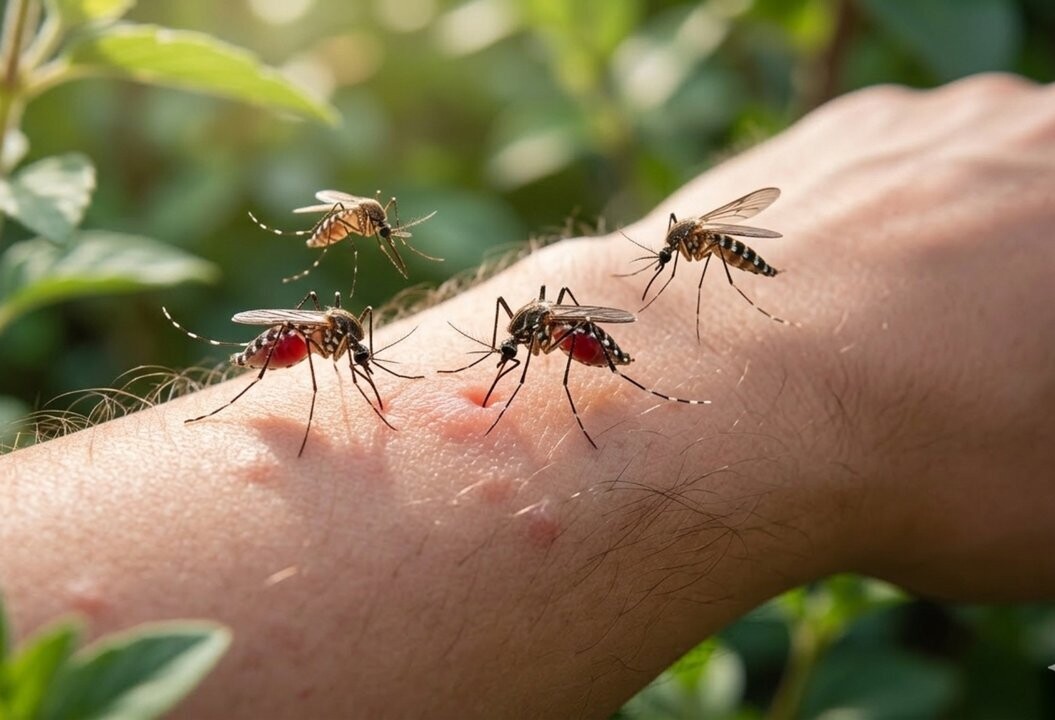
With increasing humidity and temperatures persisting above seasonal averages, residents of the Buenos Aires Metropolitan Area (AMBA) have begun to notice a massive presence of mosquitoes. The constant buzzing and bites are not just a nuisance; they raise questions about the epidemiological risk in the region. According to the Argentine News Agency, citing specialists, the mosquito invasion will be much more noticeable in the coming hours, especially in the Federal Capital and its surroundings.
Not all mosquitoes seen in clouds in the parks are transmitters, but the circulation of the Dengue virus is an active reality in AMBA. It is crucial to distinguish between species: Aedes aegypti, the "household mosquito," and Aedes albifasciatus, the "puddle mosquito." The latter does not transmit Dengue but is very aggressive and can transmit Western Equine Encephalitis.
To combat this invasion, specialists recommend a dual barrier approach: personal protection and environmental control. Personal protection includes using repellents with active ingredients like DEET, IR3535, or Icaridin. Repellents must be reapplied every 3 or 4 hours, especially if sweating. It is also recommended to wear long-sleeved shirts and light-colored pants, as dark colors attract insects. Physical barriers, such as mosquito nets on windows and nets on baby cribs or strollers, are also important.
Environmental control focuses on eliminating mosquito breeding sites. This includes turning over buckets, basins, and any containers that accumulate water. Drains and gutters should be cleaned regularly. Water in flower vases and pet bowls should be changed daily, scrubbing the container walls. Keep grass short and yards clean.
Symptoms to watch for: high fever (without a cold), pain behind the eyes, muscle and joint pain, nausea or vomiting, appearance of skin rashes. In the presence of mosquitoes and active Dengue, one should not self-medicate (especially avoiding ibuprofen and aspirin, as they can worsen the condition). Specialists also warn that aerosol insecticides only kill adult mosquitoes at that moment and do not eliminate the root of the problem. Controlling breeding sites at home, known as "Descacharrreo," is key to preventing massive invasions, especially after rains.